OpenCV 5 Python Bindings Is Here
OpenCV 5 Python Bindings Is Here
July 2026
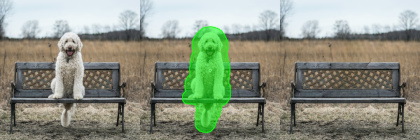
OpenCV 5 for Python has finally been released to pypi and comes with QoL for running large models through their pipeline. One interesting way to use this pipeline is to use SAM model with LaMa together in a single code base
1sam_result = sam_segment(img)
2if sam_result is None:
3    print("  SAM failed, aborting")
4    return
5mask, point_coords = sam_result
6
7inpainted = lama_inpaint(img, mask)
Where each of the functions are:
 1
 2def sam_segment(img, point_coords=None):
 3    """Segment object using SAM2.1 with point prompts."""
 4    encoder_path = MODELS_DIR / "sam_encoder_v2.onnx"
 5    decoder_path = MODELS_DIR / "sam_decoder_v2.onnx"
 6    if not encoder_path.exists() or not decoder_path.exists():
 7        print(f"  [!] SAM models not found in {MODELS_DIR}")
 8        return None
 9
10    t0 = time.time()
11    h, w = img.shape[:2]
12
13    scale = SAM_IMAGE_SIZE / max(h, w)
14    new_h, new_w = int(h * scale), int(w * scale)
15    resized = cv.resize(img, (new_w, new_h), interpolation=cv.INTER_LINEAR)
16    padded = np.zeros((SAM_IMAGE_SIZE, SAM_IMAGE_SIZE, 3), dtype=np.uint8)
17    padded[:new_h, :new_w] = resized
18
19    pixel_values = padded.astype(np.float32) / 255.0
20    pixel_values = (pixel_values - [0.485, 0.456, 0.406]) / [0.229, 0.224, 0.225]
21    pixel_values = pixel_values.transpose(2, 0, 1)[np.newaxis]
22
23    encoder = cv.dnn.readNetFromONNX(str(encoder_path), engine=cv.dnn.ENGINE_NEW)
24    encoder.setInput(pixel_values, "image")
25    image_embed = encoder.forward("image_embed")
26    high_res_0 = encoder.forward("high_res_feats_0")
27    high_res_1 = encoder.forward("high_res_feats_1")
28
29    if point_coords is None:
30        point_coords = [(w // 2, h // 2)]
31    point_labels = [1] * len(point_coords)
32    print(f"  Point prompts: {point_coords}")
33
34    scale_x, scale_y = new_w / w, new_h / h
35    pts = np.array([[[int(x * scale_x), int(y * scale_y)] for x, y in point_coords]], dtype=np.float32)
36    labels = np.array([point_labels], dtype=np.float32)
37
38    mask_input = np.zeros((1, 1, 256, 256), dtype=np.float32)
39    has_mask_input = np.array([0.0], dtype=np.float32)
40
41    decoder = cv.dnn.readNetFromONNX(str(decoder_path), engine=cv.dnn.ENGINE_AUTO)
42    decoder.setInput(image_embed, "image_embed")
43    decoder.setInput(high_res_0, "high_res_feats_0")
44    decoder.setInput(high_res_1, "high_res_feats_1")
45    decoder.setInput(pts, "point_coords")
46    decoder.setInput(labels, "point_labels")
47    decoder.setInput(mask_input, "mask_input")
48    decoder.setInput(has_mask_input, "has_mask_input")
49
50    masks = decoder.forward("masks")
51    iou_predictions = decoder.forward("iou_predictions")
52
53    best_idx, best_score = 0, -1
54    for i in range(masks.shape[1]):
55        sig = 1.0 / (1.0 + np.exp(-masks[0, i]))
56        area_ratio = sig.mean()
57        if 0.02 < area_ratio < 0.80:
58            score = iou_predictions[0, i]
59            if score > best_score:
60                best_score = score
61                best_idx = i
62    if best_score < 0:
63        for i in range(masks.shape[1]):
64            sig = 1.0 / (1.0 + np.exp(-masks[0, i]))
65            area_ratio = sig.mean()
66            if area_ratio < 0.95:
67                score = iou_predictions[0, i]
68                if score > best_score:
69                    best_score = score
70                    best_idx = i
71    if best_score < 0:
72        best_idx = int(np.argmax(iou_predictions[0]))
73
74    mask_logits = masks[0, best_idx]
75    mask = (1.0 / (1.0 + np.exp(-mask_logits)) > 0.5).astype(np.uint8) * 255
76    mask = cv.resize(mask, (w, h), interpolation=cv.INTER_NEAREST)
77
78    kernel = cv.getStructuringElement(cv.MORPH_ELLIPSE, (15, 15))
79    mask = cv.dilate(mask, kernel, iterations=3)
80
81    elapsed = time.time() - t0
82    coverage = (mask > 127).mean() * 100
83    print(f"  SAM: IoU={iou_predictions[0, best_idx]:.3f}, coverage={coverage:.1f}%  [{elapsed:.2f}s]")
84    return mask, point_coords
 1
 2def lama_inpaint(img, mask):
 3    """Remove object using LaMa inpainting model."""
 4    model_path = MODELS_DIR / "lama.onnx"
 5    if not model_path.exists():
 6        print(f"  [!] LaMa model not found: {model_path}")
 7        return None
 8
 9    t0 = time.time()
10    h, w = img.shape[:2]
11
12    resized_img = cv.resize(img, (LAMA_MODEL_SIZE, LAMA_MODEL_SIZE))
13    resized_mask = cv.resize(mask, (LAMA_MODEL_SIZE, LAMA_MODEL_SIZE))
14    _, resized_mask = cv.threshold(resized_mask, 127, 255, cv.THRESH_BINARY)
15
16    image_blob = cv.dnn.blobFromImage(resized_img, 1 / 255.0, (LAMA_MODEL_SIZE, LAMA_MODEL_SIZE))
17    mask_blob = cv.dnn.blobFromImage(resized_mask, scalefactor=1.0, size=(LAMA_MODEL_SIZE, LAMA_MODEL_SIZE), mean=(0,), swapRB=False, crop=False)
18    mask_blob = (mask_blob > 0).astype(np.float32)
19
20    net = cv.dnn.readNetFromONNX(str(model_path), engine=cv.dnn.ENGINE_AUTO)
21    net.setInput(image_blob, "image")
22    net.setInput(mask_blob, "mask")
23    output = net.forward()
24
25    result = output[0]
26    result = np.transpose(result, (1, 2, 0))
27    result = np.clip(result, 0, 255).astype(np.uint8)
28    result = cv.resize(result, (w, h))
29
30    elapsed = time.time() - t0
31    print(f"  LaMa: inpainting complete  [{elapsed:.2f}s]")
32    return result